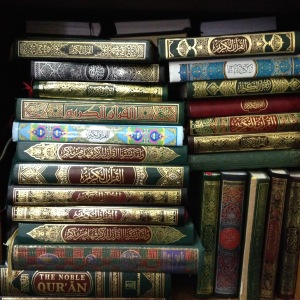
Sejarah Melayu, Tun Seri Lanang, 1612 (approx), trans. John Leyden
- Malaysia, #1
- Accessed on https://malayannals.blogspot.com/
- Read 2019-2020
- Reading enjoyment: 3/5 (as always, a subjective assessment of my own reading pleasure, and not a qualitative judgement)
I’ve gotten myself into a bit of a quandary about this blog. I started out behind–I was writing about books roughly a year after I’d read them. I thought I would catch up, but I remained about a year behind for nearly four years, through moving to the US and having my first kid. But then we moved again, had a second child, the pandemic hit, and for a little while I didn’t read very much and wrote almost nothing at all. When the dust settled, I found that I remembered very little about the books I had been reading when this blog timed out. I’ve continued to read–I’m currently on Taiwan, which means I have almost all of Southeast Asia to write about, as well as Macau and Hong Kong. I have told myself that I should just write about what I’ve read most recently and come back to the other stuff later at some point, but I find that I am constitutionally incapable of moving on out of order. I did it once, with Laos, and it just didn’t feel right.
So I’m going back to Malaysia, a list I read in 2019, pre-pandemic, pre-second baby (who is now old enough to read and write), and I’m going to throw together a few posts based on my vague memories and the sporadic notes I took at the time. I have to remind myself, over and over, that the primary purpose of this blog is for me to keep a record of my own reading, and my thoughts about it, and it doesn’t have to be brilliant (it helps that I am no longer trying to write a novel; for the first few years I was writing this blog, it was in the back of my mind that if I got a big enough audience I might spin it into a publishing deal, which is an absolutely wild aspiration for a blog about obscure books, often from somewhat obscure nations, that in all likelihood appeals to no one but myself, and frankly I probably wouldn’t read this blog if it were written by someone else, being generally more interested in fiction than literary criticism). So going forward I plan to embrace the slapdash nature of my notes and the leaky quality of my memory and just set down my unpolished thoughts so that I can move on with the list. I have read some really wonderful stuff lately and I want to get to it! Although I am really stuck on Cambodia because I read four genocide memoirs in a row and it wrecked me for a long time in a way I find hard to put into words…but I guess I’ll cross that bridge when I get to it.
I like to start with foundational literature where possible–a classic text, an epic poem, an oral history. Malaysia obliged me very nicely with Sejarah Malayu, aka The Malay Annals. Originally composed in the 17th century, based on older oral records, it details the founding of the Malacca Empire (later to become Malaysia and Singapore) by Seri Teri Buana, a descendent (according to the text) of Alexander the Great. It’s a fantastical story–from Alexander the Great it moves quickly on to deep-sea diving and underwater kingdoms, mythical beasts, and women being born from sea foam (with occasional detours into sumptuary laws and royal lineages). Among other episodes, there’s the first appearance of the singha, a creature that sounds almost entirely unlike a lion, that gave its name to both Singapore and singha beer:
There they saw an animal extremely swift and beautiful, its body of a red colour, its head black and its breast white, extremely agile, and of great strength, and its size a little larger than a he-goat. When it saw a great many people, it went towards the inland and disappeared. Sang Nila Utama enquired what animal was this, but none could tell him, till he enquired of Damang Lebar Dawn, who informed him that in the histories of ancient time, the singha or lion was described in the same manner as this animal appeared.
Malay Annals
There’s also an onshore attack by a mob of killer swordfish, who are ultimately thwarted by a boy with a knack for weaving plantain stems (but only after the rajah has ordered people to make a barrier against the deadly swords with their legs, which works out about as well as you might expect).
I read this free edition, a 19th-century translation by John Leyden, which contains no explanatory notes of any kind and often left me wondering about what sort of context I was missing. For instance, there is an episode about two brothers who are fishermen. One keeps catching sea cucumbers, which makes him angry so he boils them and they turn to gold. Fine so far, except then of course he keeps fishing for sea cucumbers, and his brother is so enraged by the idea that the first fisherman might be eating sea cucumbers that he tries to kill him. Why? Sea cucumbers are eaten in lots of places, and I know from A Decade in Borneo that they were eaten in Borneo in the 19th century, but apparently there was some sort of taboo in 17th century Malacca. There is no explanation. The lack of context made this book difficult to understand or enjoy, and ultimately I didn’t finish it. I did read long enugh to encounter a fairly wild story about a man who acquires super strength by capturing a specter and [stop reading here if you’re easily grossed out] licking up its vomit.
There’s another fully annotated edition published in 1952 by C.C. Brown; I wasn’t able to get my hands on a copy of it back in 2019, but perhaps someday in the future I’ll dip back into this wonderful collection of origin myths and try to make a little more sense of it.
 Around the World in 2000 Books
I have enjoyed reading your blog over the years and find it very inspiring that you’re back at it. Your writing matters. 🙂
Warmly, Kendra Arimoto
LikeLike
Thanks Kendra! It’s so lovely to hear from you! How are you doing? Are you still writing?
LikeLike
So happy to have these delightful explorations of places I barely am aware of in my life! Kelly’s memory of a book read in 2019 is much better than mine would be.
LikeLike
Thanks Deanna! I must admit I had some notes to refer to for this one…there are a few books from this list that I have zero memory of. Those ones are going to be tough to write about!
LikeLike